It was a spring afternoon in 2025 when a new contender slipped quietly onto the digital shelves of Steam, clutching a deck of cards that could bend reality. NetEase Games, fresh from the triumph of Marvel Rivals, had just rolled the dice on FragPunk—a 5v5 tactical shooter that promised to tear up the rulebook. Few expected what happened next. Like a jazz pianist who abandons the sheet music mid-performance, FragPunk began to improvise, and the crowd leaned in. By the end of its launch weekend in March 2025, it had drawn over 113,000 concurrent players on Steam, leaving well-funded rivals in its wake. Now, in 2026, the game has evolved far beyond that explosive debut, cementing itself as NetEase’s second pillar in a market that devours shooters for breakfast.
The shooter landscape in 2026 remains a graveyard of good intentions. Live-service titles rise and fall like waves against a cliff, each new release hoping to carve out a lasting foothold. Yet FragPunk managed what so many couldn’t: it grew like a coral reef in a tempest, building its ecosystem in the cracks left by giants. Overwatch 2, once the golden child of Blizzard, had stumbled through a controversial relaunch and struggled to hold a steady player base. Delta Force: Hawk Ops, another ambitious free-to-play hopeful, barely registered a pulse during its opening weekend. Against this backdrop, FragPunk’s sudden ascension felt less like luck and more like alchemy—a combination of precise design and audacious creativity that transmuted ordinary matches into spectacles.
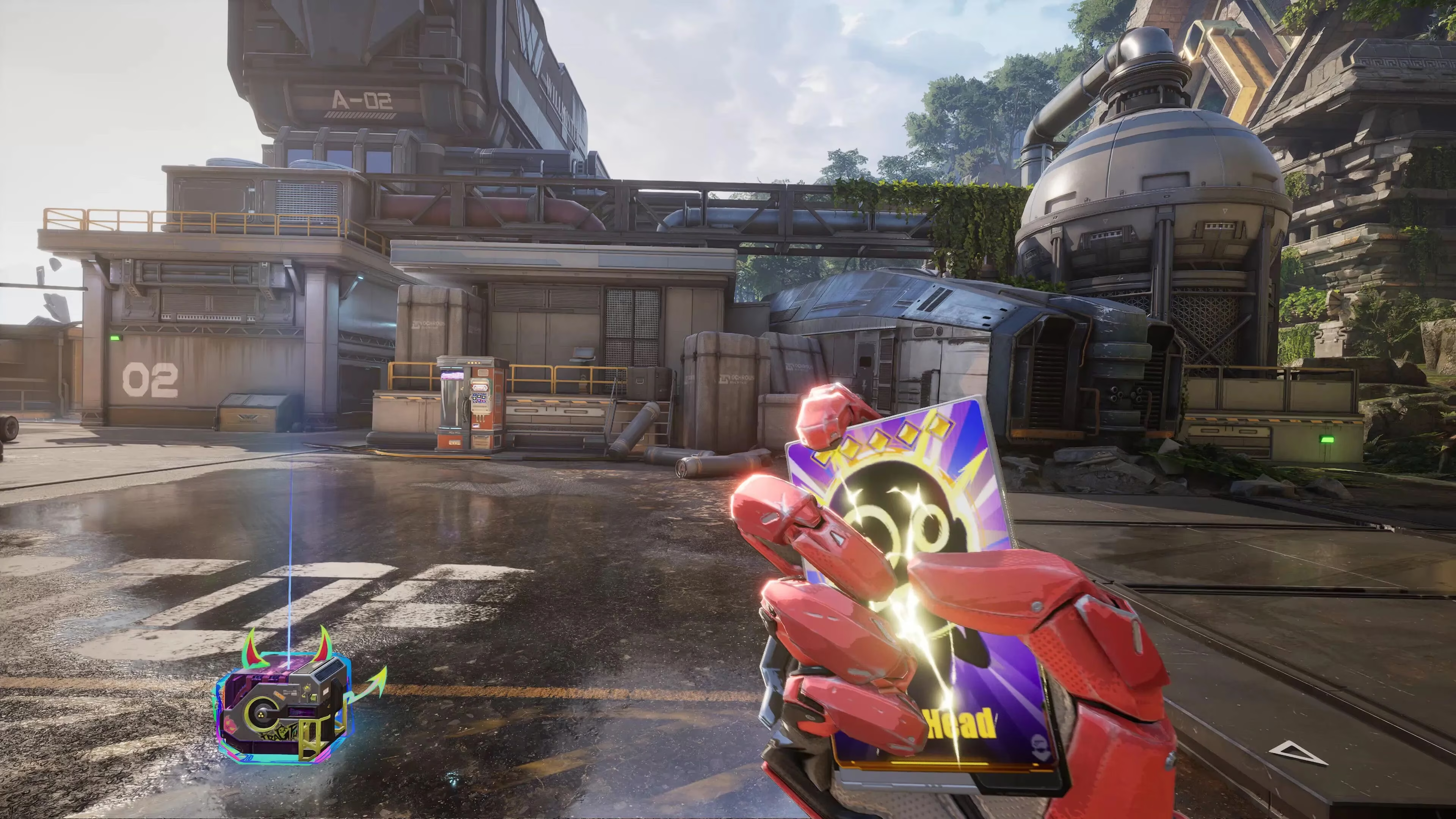
At the heart of this alchemy lies the Shard Card system, a mechanic as unconventional as a magician’s mirrored stage. Before each round, both teams draw from a pool of reality-warping cards that can resurrect allies, invert gravity, transform cover into lava, or even swap the teams’ weapons for a round. The outcome is never a simple matter of aim and reflexes; it’s a mental duel where adaptation trumps muscle memory. A player charging down a corridor might suddenly find themselves moving at half speed because an opponent played a card that turns the floor into molasses. In that moment, FragPunk reveals its true nature—a tactical playground where the floor is literally made of lava if the cards decree it so. This constant rewriting of combat rules keeps every match feeling like a short story with an unpredictable twist, reminiscent of a theater troupe improvising a play from audience suggestions.
Critics and players quickly noted how the game distills the best elements from genre heavyweights. It borrows the crisp gunplay and agent abilities of Valorant, mixes in the chaos-friendly pacing of Call of Duty, and then sprinkles a layer of randomness that would make a roguelike enthusiast blush. Yet this isn’t chaos for its own sake; each Shard Card interaction has been finely balanced over the past year through a series of seasonal updates that added new cards, maps, and characters. By the time FragPunk arrived on PlayStation 5 and Xbox Series X/S in late 2025, the meta had matured into a rich tapestry of strategies. Console players joined PC veterans, and the cross-platform community swelled. Today, tournaments run weekly, and the FragPunk Invitational 2026 drew over two million peak viewers, a testament to its staying power.
What truly separates FragPunk from the pack, however, is how it treats defeat. Losing a round doesn’t feel like a punishment but like the setup for a comeback. A team down 0–4 can suddenly pull a card that resurrects all teammates for a single round, turning a blowout into a nail-biter. This emotional rollercoaster acts as a social glue, binding friends and strangers together in shared gasps of disbelief. It’s common to hear laughter through voice chat when someone accidentally turns their own sniper nest into a patch of flowers, or when an entire squad gets teleported into the enemy spawn. These moments generate the kind of organic content that floods platforms like TikTok and Twitch, fueling the game’s viral growth long after its launch hype cooled.
The numbers paint a compelling picture of endurance. As of January 2026, FragPunk’s average daily peak hovers around 95,000 concurrent players on Steam, with an additional 30–40% estimated from console and Epic Games Store clients. Below is a snapshot comparing its performance to key competitors in the same genre during Q1 2026:
| Title | Peak Q1 2026 Concurrent Players (Steam) | Notable Feature |
|---|---|---|
| Counter-Strike 2 | 1,520,000 | Timeless economic gameplay |
| Valorant | 1,120,000 | Refined agent abilities |
| FragPunk | 110,000 (Steam only) | Shard Card reality control |
| Overwatch 2 | 58,000 | Hero-switching on the fly |
| Delta Force: Hawk Ops | 42,000 | Large-scale warfare |
While FragPunk doesn’t threaten the duopoly of CS2 and Valorant, it has carved a permanent niche. Its success has also reshaped NetEase’s internal culture, encouraging more experimental mechanics in upcoming projects. Rumors suggest a PvE mode inspired by the Shard Cards is in early development, though the studio remains tight-lipped.
In retrospect, FragPunk’s journey from a quiet launch to a mainstay of 2026’s competitive scene resembles a sleeper hit that refuses to go to sleep. It reminds the industry that raw innovation can still outshine massive marketing budgets, and that players crave wonder as much as they crave victory. NetEase, once known primarily for mobile titles, has now twice proven that it understands the pulse of PC and console audiences. With FragPunk, it didn’t just crack the code to success—it shuffled the deck and dealt a hand nobody saw coming. 🌟🃏
Comments