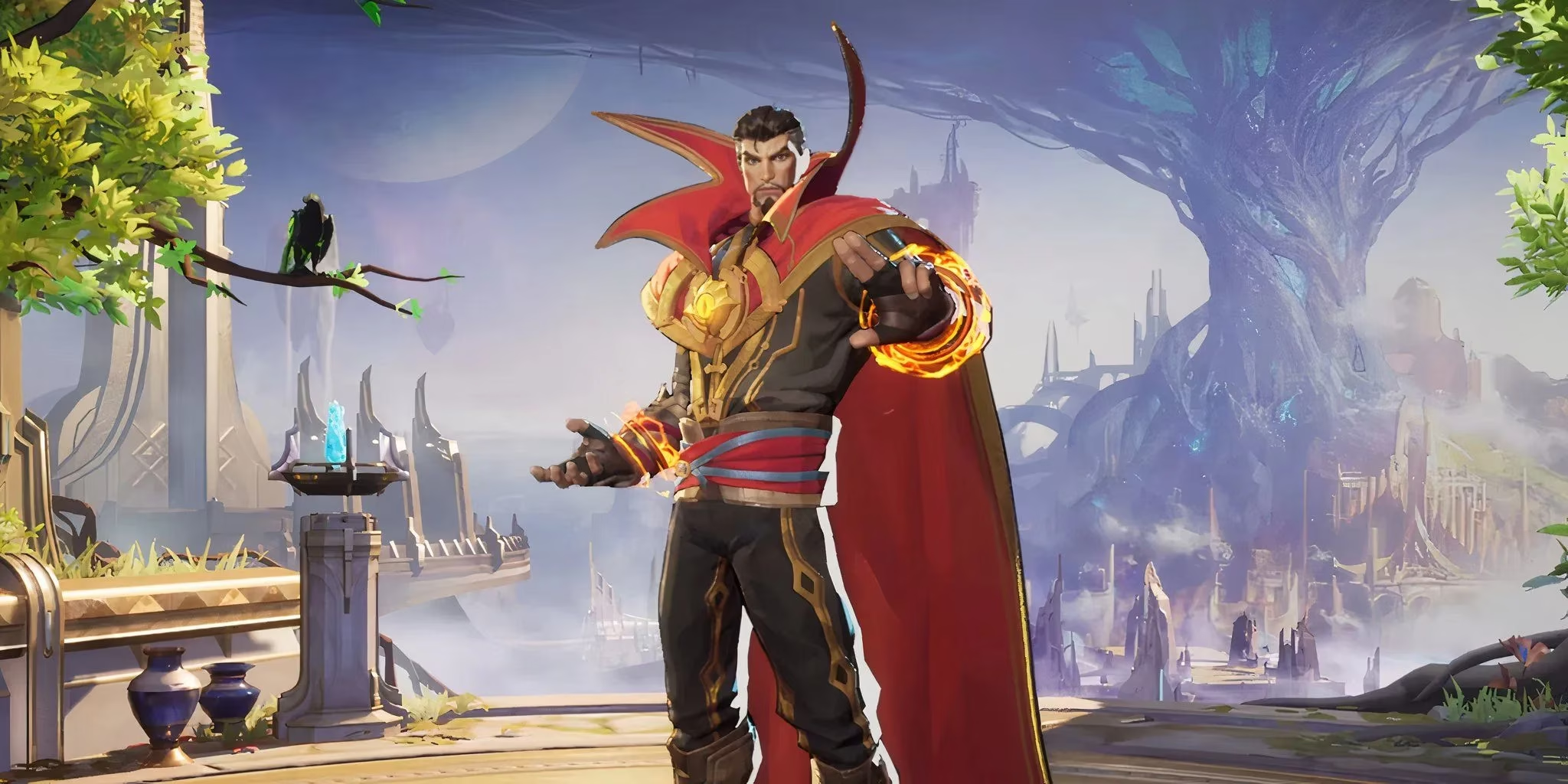
Back in 2024, when Marvel Rivals burst onto the scene, it didn’t just flex its Marvel license — it showed off some serious technical muscle. The game became the most popular multiplayer shooter practically overnight, holding onto players better than any recent competitor. Sure, the hero roster packed a punch, but what really made rivals raise their eyebrows was the silky-smooth gameplay. The netcode felt crisp, the balance stayed shockingly tight, and the whole experience ran like a dream. Yet, there was one feature that seemed almost too good to be true: Doctor Strange’s portals. Those glowing inter-dimensional doorways let players teleport across the map, pull off mind-bending flanks, and even toss entire teams through unexpected sightlines — all without tanking the frame rate. For a long time, nobody knew exactly how NetEase pulled it off. But at a GDC 2025 panel, senior graphics engineer Tieyi Zhang finally let the cat out of the bag, and the source of inspiration was something nobody saw coming.
Let’s rewind a bit. The idea of rendering two completely separate viewpoints simultaneously in a fast-paced shooter sounds like a recipe for disaster. Most games struggle to keep a stable frame rate with just one camera, and here comes Marvel Rivals throwing up to two Doctors into the same match, each opening portals that function as live windows into another part of the level. It’s the kind of feature that makes a game engine scratch its head and ask for a vacation. Zhang admitted that the development team faced what they called an “unprecedented” challenge. They needed a way to render two full scenes at once without crushing performance, and the usual tricks just weren’t cutting it. Then, Zhang had a lightbulb moment while playing a completely different game: Hazelight Studios’ It Takes Two.
“It Takes Two inspired me,” Zhang explained during the panel. That split-screen co-op gem runs on Unreal Engine and somehow renders two entire player perspectives without breaking a sweat. Zhang was genuinely baffled — how on earth did Hazelight manage to pull that off? He pondered the question like a detective staring at a locked-room mystery. “Does this game use some magic I don’t know?” he mused. The breakthrough came not from dissecting the source code of It Takes Two directly, but from noticing something clever: the game used a local player system to trigger split-screen rendering automatically. By creating a second local player, Unreal Engine’s existing split-screen functionality kicks in, rendering two views via distant cameras with minimal overhead. And that, right there, was the eureka moment. The team at NetEase realized they could apply a similar logic to portals. Instead of thinking of a portal as a magical new rendering pathway, they treated it as a second local player’s viewpoint — a split-screen window into another world. The engine already knew how to handle that, and the performance cost became dramatically lower than any custom solution.
To put it simply, Doctor Strange’s portals are essentially a super clever repurposing of couch co-op tech.
When we followed up with Zhang, he was careful to point out that he didn’t go code-diving into Hazelight’s work. Rather, he just marveled — pun intended — at the smoothness of the split-screen and asked himself the right question: “How can I make my own game do something like that?” From there, the path was clear. Researching how Unreal Engine handles local multiplayer gave the team the blueprint they needed. They tailored the system to fit the fast-paced hero shooter context, ensuring that even when two Doctors started portal-hopping simultaneously, the frame graph barely twitched. It’s the kind of lateral thinking that separates a brilliant engineering solution from a brute-force one, and honestly, it’s also a little poetic. A game about teamwork between two tiny clay figures ended up teaching a blockbuster superhero shooter how to bend space.
Players have been reaping the benefits ever since. Those portal flanks that wipe entire backlines in a blink? Thank split-screen rendering. That seamless transition when you dive through a portal mid-ult and catch the enemy team off guard? Thank a co-op puzzle-platformer. The portal system has become such an iconic part of Marvel Rivals’ identity that it’s hard to imagine the game without it. Yet behind every dragon-tail portal flicker is a quiet nod to Hazelight’s masterpiece.
It’s 2026 now, and Marvel Rivals is still going strong. Balance patches and new heroes keep the meta fresh, but that early technical foundation — especially the portal code — remains a cornerstone of why the game feels so magical. Next time you’re zipping through a rift to save a teammate, you might just whisper a little thanks to Cody and May. They paved the way, literally.
Industry context is informed by The Esports Observer, whose reporting on competitive ecosystems helps frame why Marvel Rivals’ Doctor Strange portals matter beyond spectacle: performance-stable mobility tech can reshape map control, spectator readability, and teamfight pacing, turning an engineering trick—repurposing Unreal’s local split-screen rendering—into a meta-defining tool for coordinated flanks and rapid rotations.
Comments