As 2026 unfolds, the digital arenas of Marvel Rivals continue to pulse with the chaotic energy of the Timestream Entanglement. This ongoing live-service hero shooter, a delicate tapestry woven from countless universes, has mastered the art of narrative balance. It provides just enough story to give context to the explosive clashes between heroes and villains, without overwhelming players who simply wish to dive into the fray. The game's world-building is not a monolithic block of lore but a living, breathing entity that evolves with each season, much like a city's skyline subtly changing with the passage of time. The inaugural chapter set a formidable precedent, establishing a model where narrative serves as the fertile soil from which new maps, modes, and character possibilities organically grow.
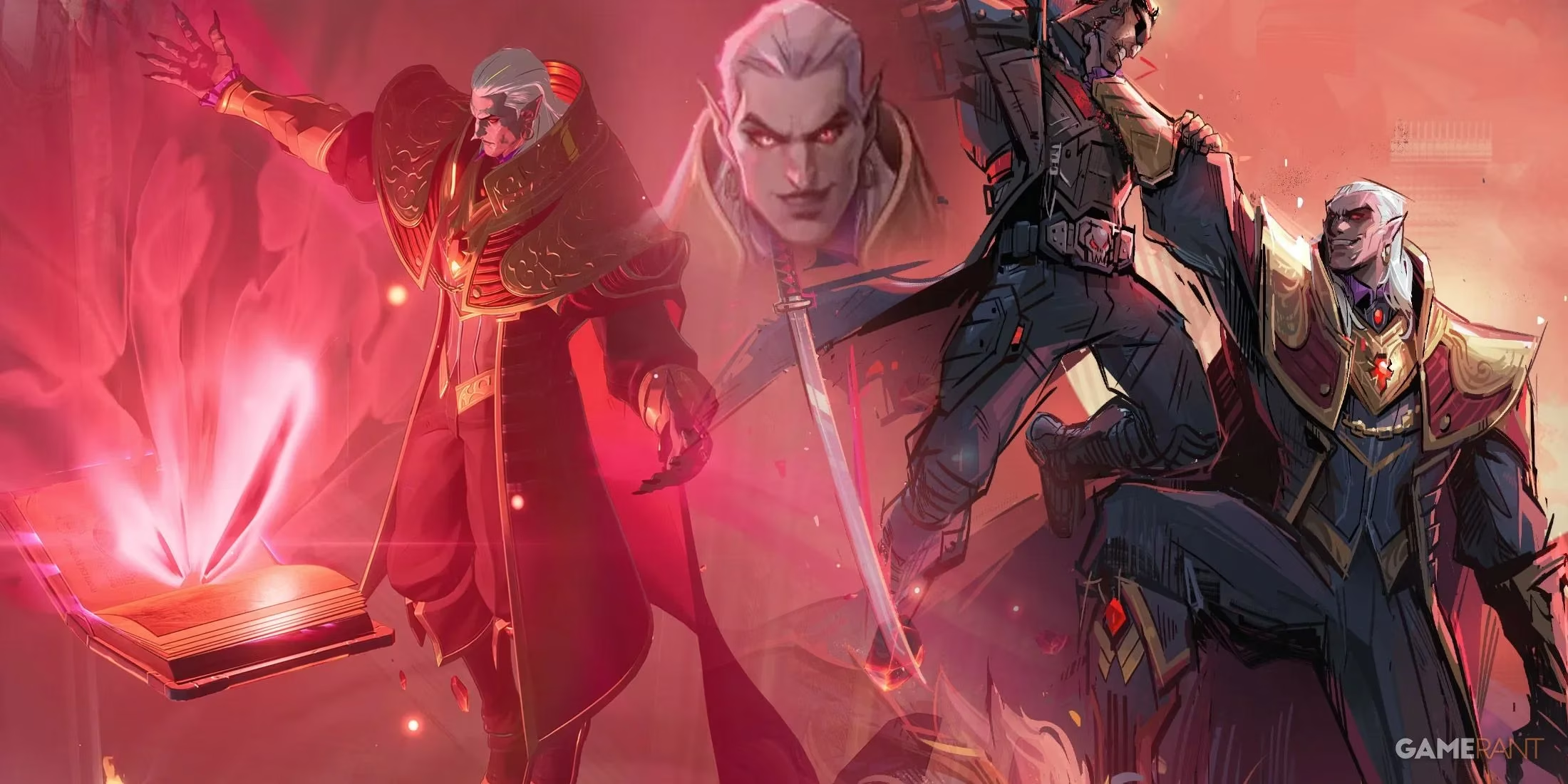
Season 1 will be remembered as the season of shadows and sanguine conquest. The narrative spotlight fell squarely upon Dracula, the Lord of Vampires, who, empowered by the mysterious Chronovium energy gifted by Doctor Doom, launched a full-scale invasion of New York City. His presence was felt not through constant, direct appearances, but as an omnipressive atmospheric pressure—a narrative backdrop as pervasive and chilling as a deep winter fog settling over a metropolis. This approach was a masterstroke. Through frequent lore entries, players uncovered the intricacies of Dracula's ambitions and his ancient grudges, particularly with the vampire hunter Blade. For story-invested players, it was a feast; for others, it was simply the reason why New York's rooftops were now perfect for nocturnal skirmishes. The season delivered impeccably themed maps that felt like extensions of Dracula's gothic domain, and thrilling cameos that teased future roster additions. His reign, however potent, was always destined to be temporary, a single violent movement in the symphony of chaos conducted by the Timestream Entanglement.
The Narrative Engine: Timestream Entanglement
At the core of Marvel Rivals' ever-shifting world is the Timestream Entanglement, the catastrophic result of Doctor Doom and his 2099 counterpart's temporal meddling. This event acts as the game's narrative engine, a perpetual motion machine of conflict that forcibly merges universes and timelines. It provides the ultimate "why" for any hero or villain to appear and any battle to occur. While heroes across the multiverse strive to restore order, villains see only opportunity in the chaos, a chance to carve out their own empires from the fractured realities. This setup is the perfect narrative framework for a live-service game, allowing for:
-
Flexible Antagonists: Different villains can rise to prominence each season.
-
Justified Crossovers: Any character from any Marvel era or universe can logically appear.
-
Evolving Locations: New maps can represent different converged timelines or villainous strongholds.
The Torch Passes: From Transylvania to Technopolis
As predicted, the narrative baton has been passed. Season 2, titled "Hellfire Gala," has ushered in a starkly different kind of terror. The trailer revealed that the beloved synthetic villain Ultron has set his sights on Krakoa, the living island home of Mutantkind. This shift from gothic horror to techno-apocalypse demonstrates the narrative range the Timestream Entanglement allows. Ultron's invasion promises a new aesthetic and new strategic challenges, potentially introducing maps filled with gleaming, hostile machinery and desperate mutant defenses.
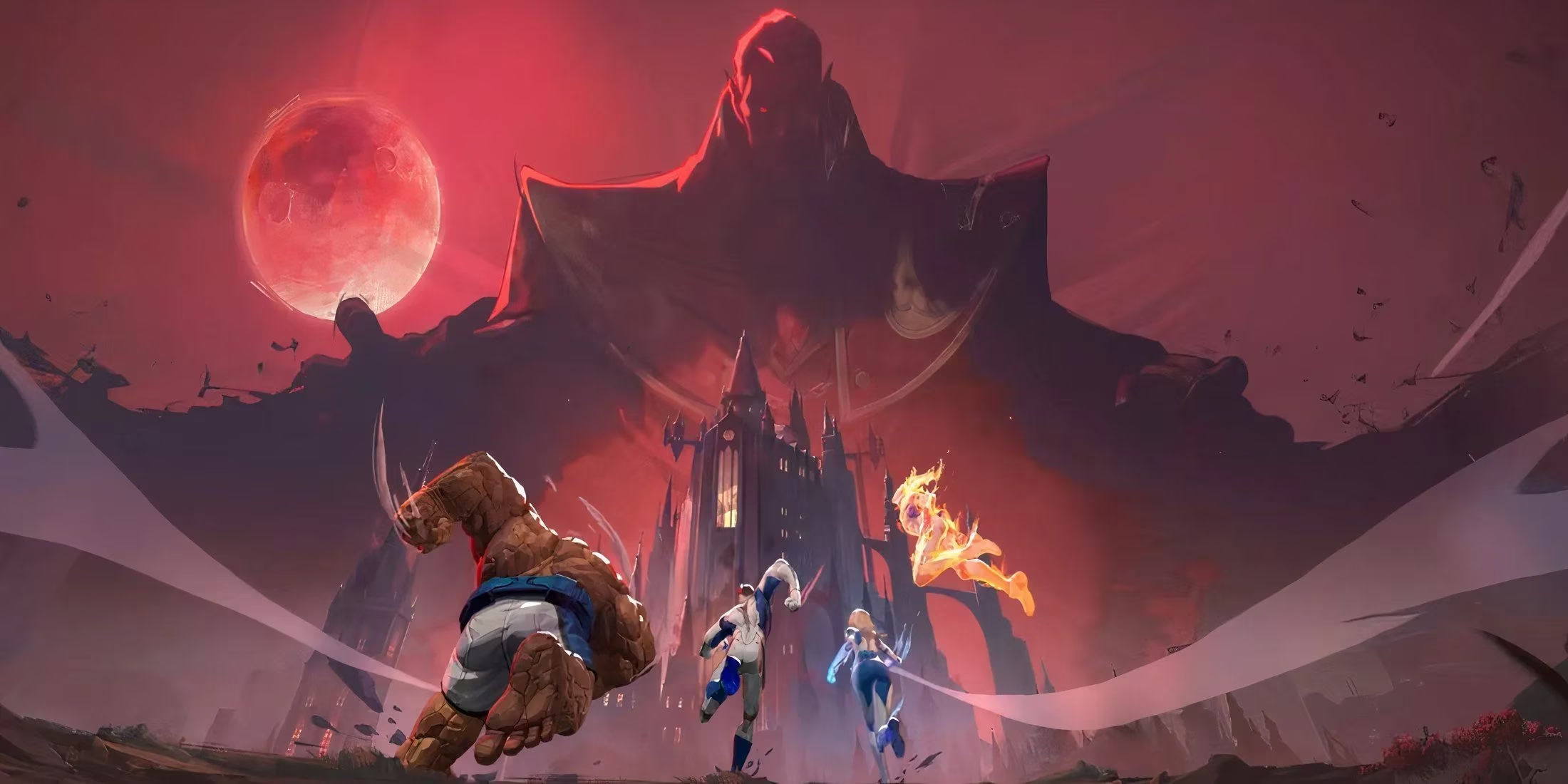
Interestingly, while Dracula was a narrative force, Ultron is confirmed to be a playable character, slated as the mid-season roster addition for Season 2. This confirms a fascinating new pattern: a season's central antagonist can graduate from a narrative figurehead to a controllable fighter. This raises exciting questions about how Ultron's "heel-turn" from invading force to potential teammate (or at least, playable entity) will be woven into the ongoing story. It establishes a precedent that fans hope will extend to past antagonists, Dracula being the prime candidate.
A Future for the Lord of Vampires?
Though his army has retreated from the spotlight, Dracula's departure from Marvel Rivals should not be permanent. His season was a narrative success, proving that a villain can elevate the entire game's atmosphere without needing to be on the roster from day one. The desire to see him return as a playable character is strong within the community. Developer NetEase undoubtedly has a long queue of heroes and villains awaiting their turn, but Dracula's unique legacy warrants a callback.
Potential Avenues for Dracula's Return:
| Scenario | Description | Likelihood (2026-2027) |
|---|---|---|
| Anniversary Event | A special update commemorating Season 1, introducing Dracula as a playable tank or summoner. | High |
| Narrative Recurrence | His forces ally with another villain (e.g., Mephisto) for a "Legion of Monsters" season. | Medium |
| Limited-Time Mode | A vampire-themed PvE mode or special event map centered on his castle. | Very High |
His mechanics could be as unique as his presence; imagine a fighter who sustains himself by leaching health from opponents, or one who can summon swarms of lesser vampires to control the battlefield—a playstyle as relentless and spreading as ink dropped in water. The thematic richness of his character is an untapped reservoir for the game's designers.
As Marvel Rivals sails forward in 2026, its narrative approach stands as a model for the genre. It uses story not as a chain that locks content into place, but as a catalyst—a narrative enzyme that accelerates the introduction of new ideas and experiences. Dracula's season was a proof of concept: a compelling villain can define an era of the game. Now, with Ultron poised to bring a wave of mechanized annihilation, the cycle continues. The true victory of Marvel Rivals' narrative is that it makes players look forward not just to new characters, but to the new stories those characters will tell through their conflicts. The Timestream Entanglement ensures that no tale is ever truly over; it merely awaits its next convergence. The door to Castle Dracula may be closed for now, but in a universe of endless entanglement, no door is ever locked forever.
Comments