As a dedicated player who has been with Marvel Rivals since its launch, I've witnessed the game's incredible highs and its recent period of adjustment. Even though the initial frenzy has settled, the hero shooter remains a vibrant part of my gaming routine, and the news from NetEase has me both thrilled and deeply contemplative. The developer's ambitious roadmap for 2026, promising a new hero every single month starting with Season 3, signals a massive commitment to the game's longevity. The addition of Unstable Molecules to the battle pass, allowing free access to skin recolors and Ultimate animations, feels like a genuine gift to the player base. The imminent arrivals of Jean Grey and Blade have the community buzzing with theories about their kits and how they'll shake up the meta. Yet, amidst all this exciting news, one proposal from NetEase casts a long shadow: the potential for the community to vote on future character additions.
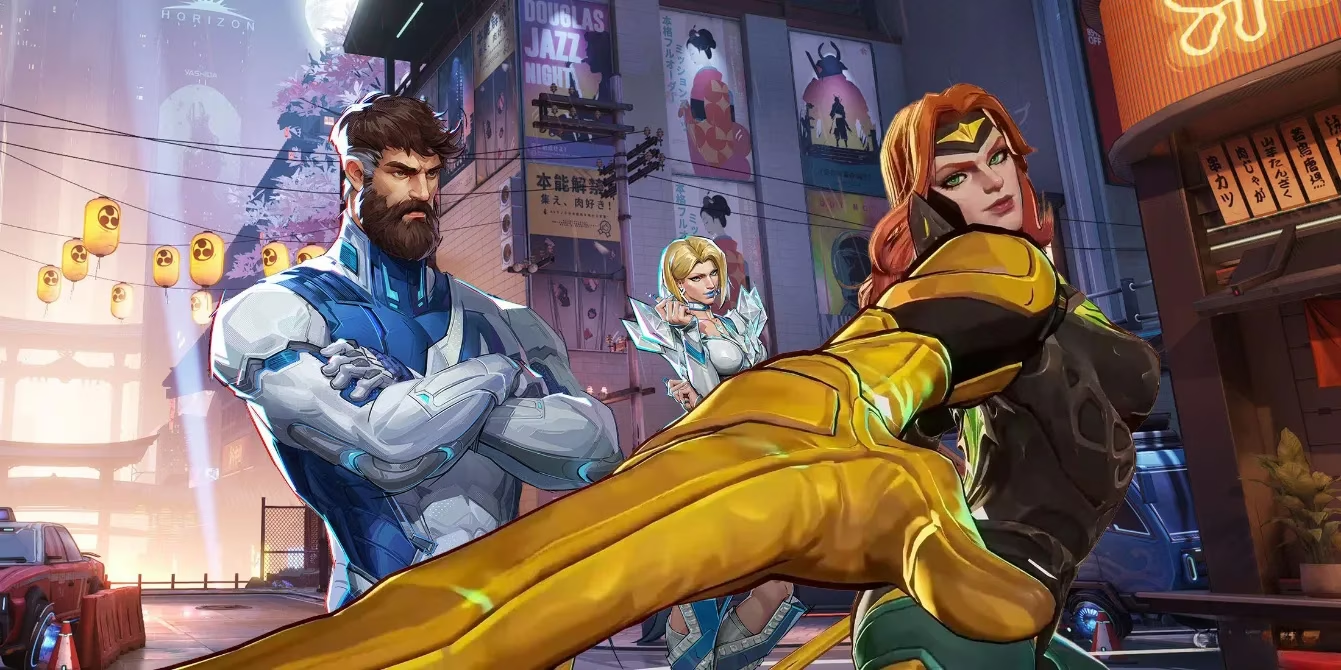
The concept, mentioned in a recent interview, sounds fantastic on paper—empowering the players to shape the world they love. Who wouldn't want a say in which iconic or obscure Marvel character joins the fray next? However, my experience within this game's ecosystem makes me pause. While NetEase has done a commendable job steering the ship so far, handing over the reins for hero selection feels like navigating treacherous waters. The community, for all its passion, is not a monolith. We've seen fractures before, from the Support role strike to the endless, often vitriolic, debates on balance patches and the prevailing meta. Trusting this collective to make a unified, constructive choice for the game's future roster seems overly optimistic, if not naive.
Let me break down my core concerns, which have only grown since this idea was floated:
-
The Toxicity Trap: 🚫 Marvel Rivals has a community spirit problem that's been festering. It hasn't reached the infamous depths of some other competitive titles, but it's significant enough that high-profile streamers have publicly quit, citing the hostile player base as a primary reason. Imagine injecting a high-stakes popularity contest into that environment. A hero vote wouldn't just be about preferences; it would become tribal warfare. Players would lash out not just at opposing choices, but at the people who champion them, turning forums and social channels into battlegrounds over pixels and polygons.
-
The Role Imbalance: ⚖️ In any hero-based game, role popularity is a stark reality. In Marvel Rivals, Duelists are the undisputed kings, boasting the largest roster to cater to their massive fanbase. Vanguards, the crucial front-line tanks, have the smallest dedicated following. If a vote ever pits a flashy new Duelist against a sturdy new Vanguard, the outcome is a foregone conclusion—not based on game health, but on sheer demographic weight. This would perpetuate an existing imbalance, making it harder for NetEase to ensure every role feels fresh and supported.
-
The Tragedy of Lost Concepts: 💔 This fear stems directly from models like Minecraft's controversial mob votes. The system NetEase might emulate could present us with three fully realized, amazing hero concepts. We'd be forced to choose just one, knowing the other two might be shelved indefinitely. As a fan of Marvel's vast lore, the thought of brilliant designs for characters like Moon Knight or Squirrel Girl being permanently scrapped because they lost a popularity contest is genuinely heartbreaking. It stifles creativity and limits the game's potential to surprise us.
-
The Popularity Contest: 🏆 If votes aren't structured by role, they will inevitably default to a contest of recognition. We'd end up with a parade of Spider-Men, Wolverines, and Iron Men, while the rich tapestry of Marvel's universe—its quirky, niche, and deeply compelling lesser-known characters—would be ignored. Part of the magic of Marvel Rivals so far has been NetEase's willingness to take risks, like introducing the relatively obscure Luna or designing unique kits for characters like Magik. A pure democracy of popularity would kill that bold spirit.
Given these points, I believe NetEase should retain primary control over the hero roster. Their vision has brought us this far, and their planned monthly cadence for 2026 shows they have a clear, ambitious direction. However, I don't think the idea of community involvement needs to be discarded entirely. It just needs to be carefully fenced and managed.
There are smarter, safer ways to let players feel heard without handing them the keys to the kingdom:
-
The Annual Vote: Instead of voting for every hero, we could have one special community vote per year. This could be tied to a major in-game event (like the Hellfire Gala, but for a hero). This makes the vote a celebrated occasion, not a routine expectation, and ensures NetEase maintains creative control for 90% of the annual additions.
-
The Sequencing Vote, Not the Selection Vote: 🗓️ Here's a compromise I could get behind. Don't make us choose which hero gets made. Instead, present three finished heroes that are confirmed for release in the next year. Let the community vote simply on the order they arrive. Do we want the Tactician first, or the Duelist? This gives players agency, creates hype, and guarantees no fantastic concept is lost forever.
-
Vote on Everything Else: Maps, seasonal themes, event types, or even skin lines—these are areas where community voting could be incredibly fun and low-stakes. Deciding whether a new map is set in Wakanda or the Savage Land, or whether the next seasonal event has a Noir or Asgardian theme, are perfect ways to involve us without risking the core gameplay balance or narrative direction.
Ultimately, my journey in Marvel Rivals has been defined by discovery—both of the game's mechanics and the unexpected heroes I've grown to love. That sense of discovery is fragile. While the promise of monthly heroes in 2026 is exhilarating, the path to getting there matters. I trust NetEase's developers to continue making bold, interesting choices. I want them to surprise me. I'm asking them, as a dedicated player, to use our feedback as a guide, not a mandate. Let's build the future of Marvel Rivals together, with them steering the ship and us helping to chart a course through waters we all want to explore.
Insights are sourced from GamesIndustry.biz, whose reporting on live-service strategy and player-community dynamics helps contextualize why a monthly-hero roadmap can succeed only if the cadence doesn’t compromise role balance, onboarding, and long-term retention—concerns that mirror the risks of turning roster decisions into popularity votes rather than developer-led planning.
Comments