I remember firing up Marvel Rivals for the first time back in 2025 with the simple joy of a comic book fan. Here was a game promising to let me web-sling as Spider-Man or unleash gamma-powered rage as the Hulk alongside friends in a lighthearted, accessible package. Flash forward to 2026, just over a year since its launch, and that initial promise feels like a distant memory. What was once billed as a casual-friendly gateway into the hero shooter genre has undergone a metamorphosis as jarring and complete as Bruce Banner's transformation—emerging not as a fun-loving green giant, but as something far more aggressive and unwelcoming. The casual scene, the very heart the game was supposed to thrive on, is now in complete disarray.
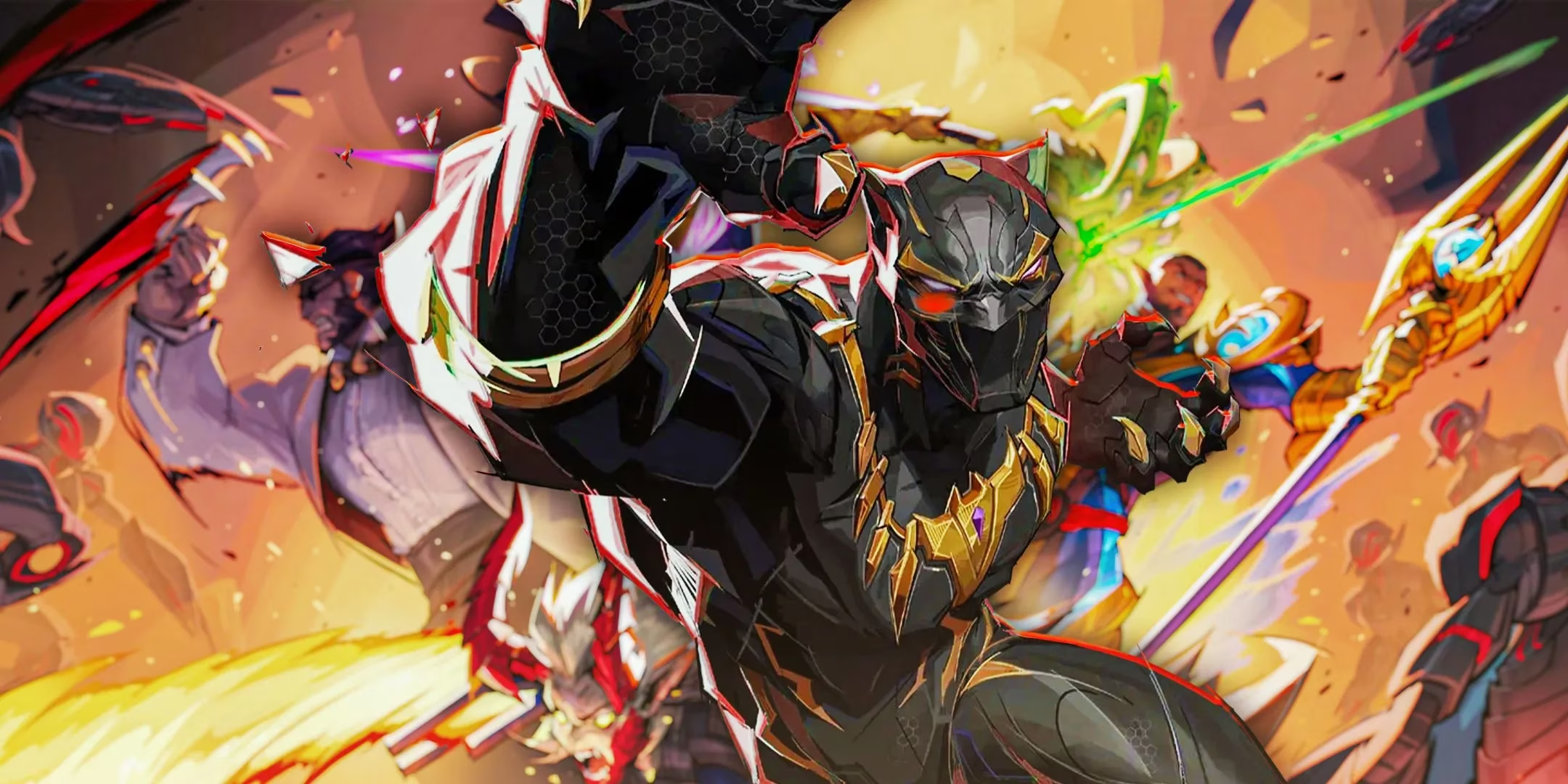
Over the past several months, Marvel Rivals has transformed from my weekend unwind into one of the most intense, sweat-inducing experiences in my gaming library. The idea of hopping into a quick play match for some casual fun now feels like a quaint fantasy. The root of the problem is woven into the game's very design philosophy. Every hero is a potential lobby dominator, which sounds great for the power fantasy—summoning tornadoes as Storm or detonating like a miniature supernova as Scarlet Witch. However, this has created a brutal ecosystem where balance feels more like a suggestion than a rule. Black Panther, for instance, has become the apex predator of quick play. His time-to-kill is so ruthlessly efficient that facing him is less a duel and more like being caught in a bear trap you never saw coming. With him often banned in ranked, quick play has become his personal hunting ground, infested with players using him not to learn, but to dominate. Trying to learn a new character there is like bringing a butter knife to a laser sword fight; you're just raw material for the Wolverines and Spider-Men who treat the mode as their personal highlight reel generator.
The pressure to "counterswap"—to abandon the hero you want to play to specifically counter an overpowered pick—has sucked the joy out of the casual experience. Nobody enjoys being told their choice of hero is invalid before the match even begins, especially when the punishment for non-compliance is being deleted from existence in under a second. Picking a fun, off-meta character feels like painting a target on your back for every hyper-optimized player in the lobby.
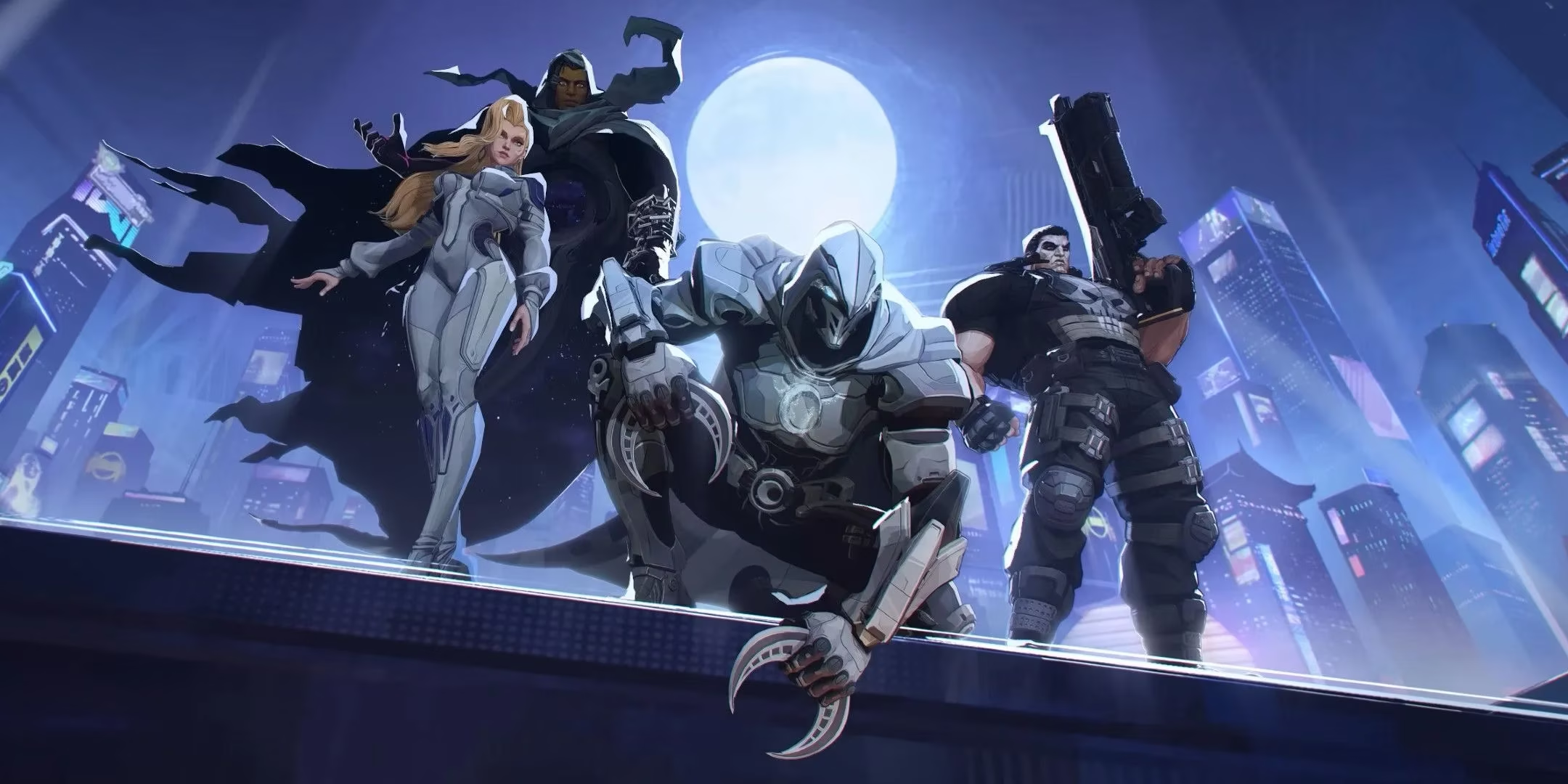
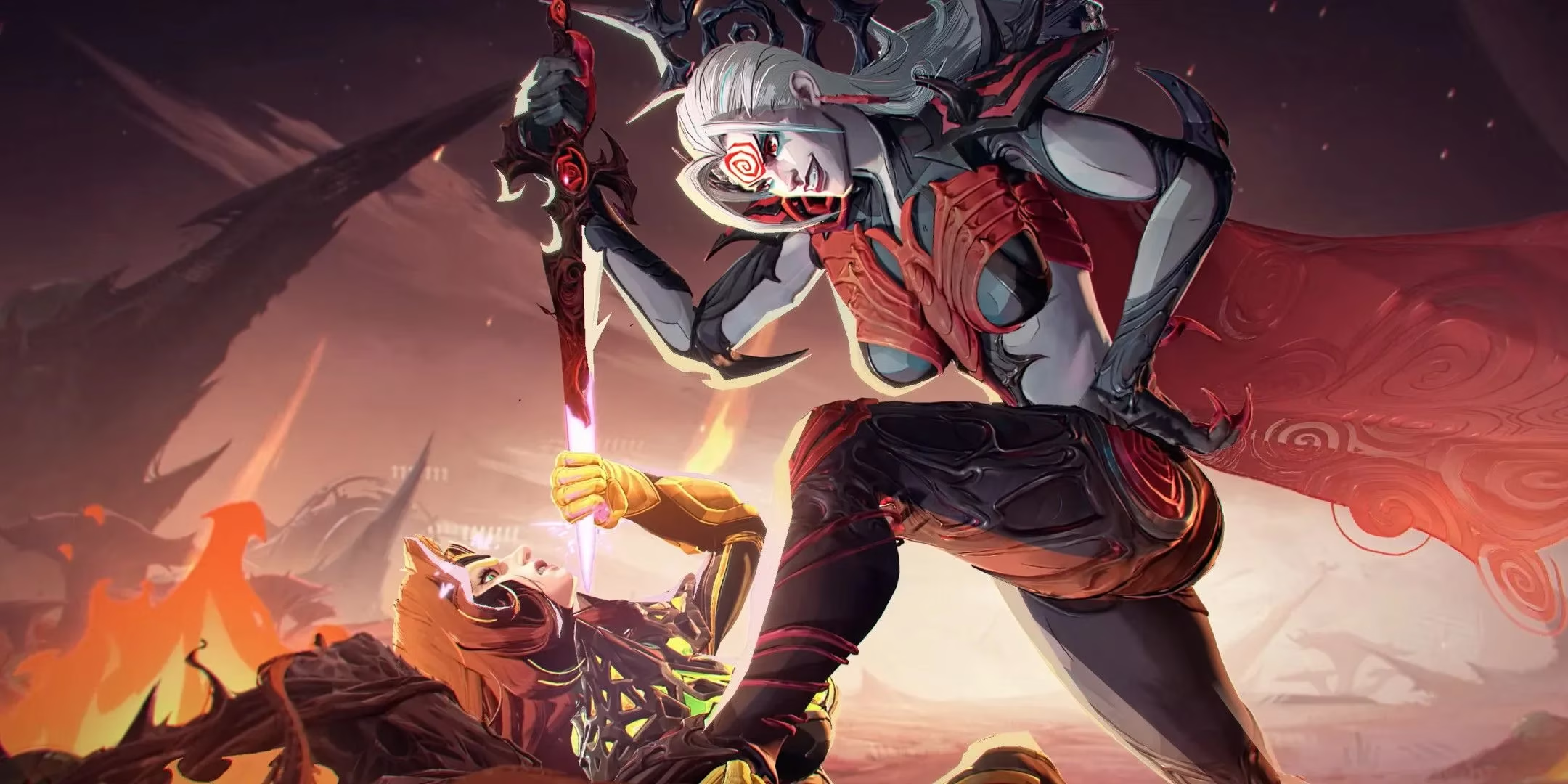
So, the natural thought is to seek refuge in ranked play. At least there are bans there, right? A casual player can just park in Gold or Platinum, ban the most egregious offenders, and enjoy somewhat balanced, competitive matches. Unfortunately, that's not the reality. Marvel Rivals' competitive ladder is its own special kind of chaos, arguably in worse shape than quick play. Due to frequent rank resets and the continued, baffling absence of proper placement matches, the lower ranks have become a surreal melting pot. It's a place where genuine newcomers, returning high-level players, and outright smurf accounts all collide in a matchmaking cocktail that defies all logic. Escaping Black Panther only means you might run into a player who belongs in the top ranks, casually dismantling your team with a perfectly tuned Psylocke or Star Lord on their way back up. Your rank badge in Marvel Rivals is about as indicative of your actual lobby's skill level as a weather forecast is for next year's hurricane season—utterly unreliable.
The final nail in the coffin for group play is the restrictive party system. Want to climb the ranks with your full squad of friends? Forget it. Once you hit Platinum, you're immediately restricted to stacks of three. This arbitrary limit feels less like a balance decision and more like a directive from on high: "You will solo queue. You will endure the matchmaking lottery. You will like it." It's a policy that actively discourages the social, cooperative fun that should be this genre's cornerstone, all while the in-game store continues to pump out flashy new cosmetics.
As we move through 2026, I've made the difficult decision to step away from Marvel Rivals. The game is heading in a direction I can no longer follow. The clear line between casual quick play and competitive ranked has blurred into a singular, stressful grind. Fun, competitive matches are as rare as a polite conversation in the game's text chat, which houses one of the most persistently toxic communities I've encountered. Trying to keep up with the constantly shifting meta and the ever-inflating skill floor feels less like a hobby and more like a part-time job without the pay. The game's identity crisis is complete: it is no longer for the casual Marvel fan or the curious newcomer, despite what any marketing or dedicated streamer might say. If someone asked me today if they should try Marvel Rivals, my advice would be to treat it like an unstable reactor core—admire the potential power from a very, very safe distance.
The core experience now is defined by frustration. Here’s what a typical session has devolved into:
-
Quick Play Quagmire: A mode overrun with unmatched heroes and players treating it as serious practice for ranked, creating a hostile learning environment.
-
Ranked Roulette: A ladder system where matchmaking integrity is sacrificed, pitting wildly disparate skill levels against each other in the name of faster queue times.
-
Social Strangulation: Arbitrary group restrictions that punish friends for wanting to play together competitively.
-
Balance Whiplash: A relentless update cycle that often introduces new heroes or changes that disrupt the meta before the last imbalance has been addressed, keeping the community in a perpetual state of adaptation fatigue.
Marvel Rivals has the iconic characters and the visual spectacle, but its soul—the accessible, celebratory, comic-book-fun soul—has been eclipsed. It now stands as a monument to optimization over enjoyment, a game that forgot its own welcoming premise. Until fundamental changes are made to address these core issues, my journey with it is on pause. The power fantasy remains, but the fun, for players like me, has fizzled out.
Comments