As I queue up in 2026, I’ve been running Marvel Rivals lobbies long enough to know that a balance patch is rarely a scalpel; it’s usually a sledgehammer with a ribbon around it. Season 1.5 was supposed to kneecap the triple support meta by trimming healer ultimates, but it also gave one flying Avenger a buff that now feels like handing a flamethrower to a paper airplane. I’m talking about Iron Man. Before the patch, he was mostly a niche pick outside the Hulk team-up. Now I’m watching backlines melt like a snow fort under a blowtorch, and I can’t shake the feeling that NetEase has overcorrected again.
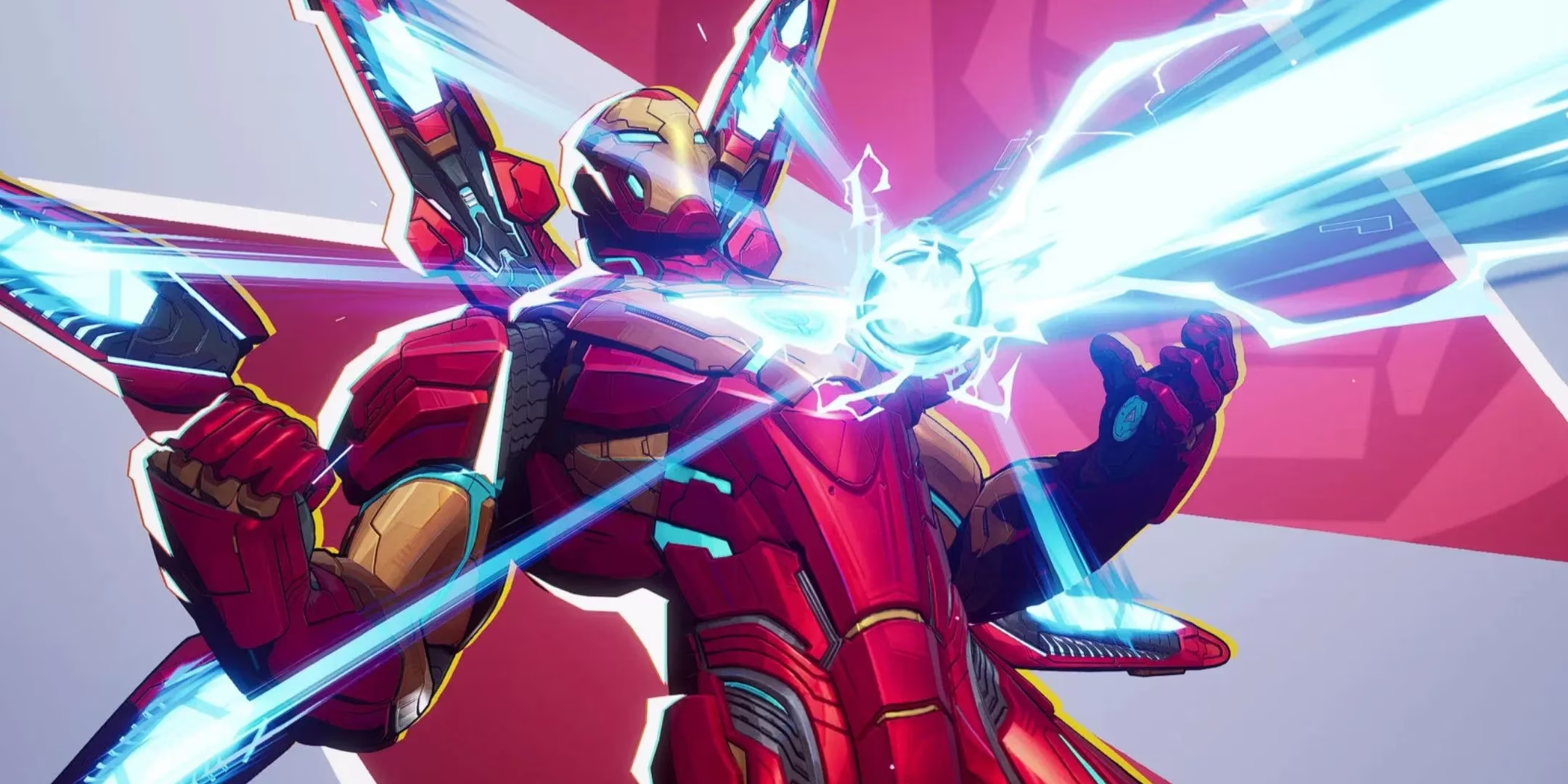
Let’s talk about the Unibeam, because that’s where the damage arithmetic gets absurd. The raw beam now clocks 140 damage per second, and the boosted version jumps to 190. For perspective, the Gamma Unibeam from the Hulk team-up was considered so busted that Hulk was banned in nearly every ranked lobby, and that version dealt 220 damage per second. The new boosted Unibeam is creeping toward that old team-up number without demanding the same team composition commitment. That is a massive shift in his baseline threat.
| Beam Version | Damage Per Second |
|---|---|
| Raw Unibeam | 140 |
| Boosted Unibeam | 190 |
| Gamma Unibeam with Hulk team-up | 220 |
The math isn’t just about raw DPS. The beam’s duration and thickness make it forgiving in a way that high-level players tend to punish. An Iron Man can fly into the backline, hold left-click or right trigger, and erase a duelist or strategist before peeling tools come online. Then he flies out like a fighter jet with the parking brake removed. In the previous meta, Iron Man needed the Hulk team-up to feel like that kind of aerial assassin. Now he can do a budget version of it in every match, and that’s the heart of the frustration.
I saw the community heat up around this almost immediately. A player named Ilikehotdogs1 posted that they are now ‘insta banning Iron Man every match’ because the Unibeam’s damage is obscene. Other players chimed in with the same complaint: the beam is too thick, lasts too long, and is too easy to connect. Several replies said NetEase should have buffed his missiles instead and left the Unibeam alone. I agree with that direction. Buffing the Unibeam feels like fixing a leaky faucet by opening the fire hydrant: the original issue may be addressed, but the rest of the lobby gets flooded.
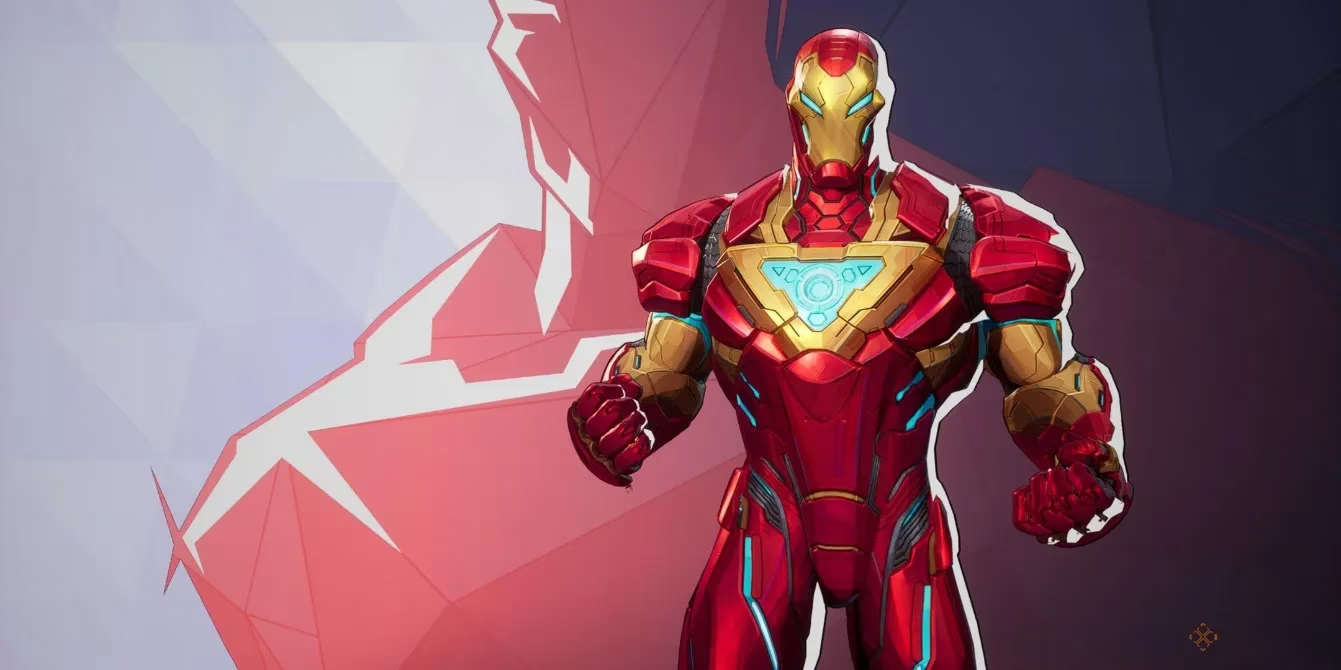
This is not the first time NetEase has overcorrected. Moon Knight went through a similar cycle, and players needed time to adjust. The difference here is that Iron Man’s escape tools and flight make him much harder to pin down once the beam deletes a target. The triple support nerf likely made this worse, because fewer support ultimates are available to shrug off his burst. In the past, two strategists could stack healing ults and buy enough time to punish the dive. Season 1.5 trimmed that safety net, so Iron Man’s burst feels even more final.
That said, I do not think Iron Man is unstoppable. The adjustment phase is real, and you have answers if your team is willing to swap. Hela can contest him at range, Punisher can shred his flight path, and Spider-Man can stick to him and force bad cooldowns. The problem is that these counters require coordination or aim, while Iron Man’s new value comes from hovering at an angle and holding a beam. That asymmetry is exactly why he is eating bans in my lobbies.
I’ll keep Iron Man in my ban rotation for now. If the meta adapts and teams start calling out his position earlier, maybe he returns to a fair spot. But if the Unibeam remains this overturned a few weeks into the season, I expect him to live in ban jail until Season 2. NetEase gave an already mobile hero too much raw output, and until that changes, he will keep turning team fights into a light switch.
Data referenced from Game Developer (Gamasutra) helps frame why Season 1.5’s Iron Man Unibeam spike feels so polarizing: when balance changes amplify a low-friction damage tool (high uptime, forgiving hit volume, and strong escape options), the result often compresses counterplay into narrow, coordination-heavy answers—exactly the kind of “easy value vs. hard response” asymmetry that turns a strong pick into a frequent ban as lobbies adapt.
Comments