It has been over a year since Doctor Doom’s temporal shenanigans and Dracula’s fanged infestation descended upon New York. Back in 2025, everyone expected blades and bats when vampires took over the eternal night, but NetEase had other plans. Instead of Marvel’s iconic daywalker, they handed players the keys to the Baxter Building and let the Fantastic Four steal the show. By the time the midseason update rolled out, Reed, Sue, Johnny, and Ben were all brawling across the chaos, and it immediately became obvious: this family was built for more than a hero shooter cameo. In 2026, the question isn’t if they should get their own game, but why it hasn’t been announced yet.
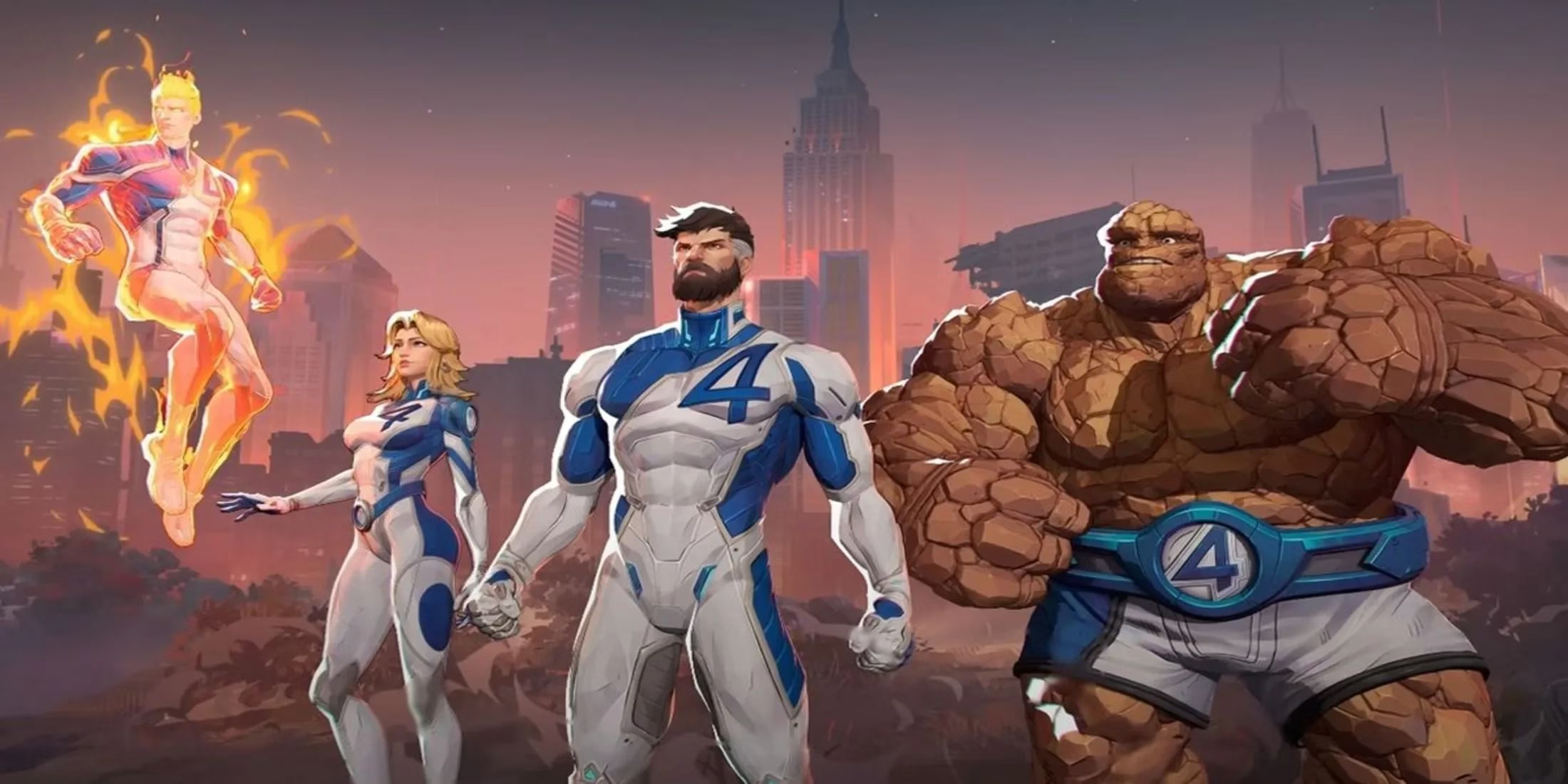
Every member of the Fantastic Four brings something radically different to the battlefield. Reed Richards, the stretchy genius, is the undisputed star of flexibility — both literally and mechanically. His kit lets him balloon into a colossal shield, yank enemies across the map with a rubbery limb, and morph into a bouncing sphere of chaos. He feels like a laboratory experiment gone right, the kind of wildly original design that makes hero shooters exciting. If NetEase ever needs inspiration for future characters, they'll just rewatch his highlight reel. Sue Storm obligingly vanishes between fights and can shroud entire zones with her ultimate, all while silently judging her teammates’ positioning. Her passive health bonus for the rest of the Four is a quiet but vital glue. Then there’s Johnny Storm, blasting fireballs from above with the grace of a flaming hummingbird, and Ben Grimm, who solves every problem with a thunderous knuckle sandwich, a charge, and another fistful of pavement. Their matching blue costumes can’t hide the fact that these four play like entirely different games stitched together — and that’s exactly why a solo outing makes so much sense.
A dedicated Fantastic Four title could follow a few blueprints. A four-player co-op brawler where each hero is controlled by a different friend sounds charming, but after the ghost of Marvel’s Avengers still haunts boardroom meetings, it’s safer to aim for something more focused. The smarter path leads to a single-player narrative experience, much like Eidos Montreal’s Guardians of the Galaxy. In that gem, players embodied Star-Lord and directed the rest of the squad through clever combat commands and relationship-building moments. Apply that formula to the First Family: you control Reed Richards for the entire adventure, keeping him at the heart of every stretch, squeeze, and scientific monologue. A single button prompt could order Johnny to torch an obstacle, Ben to smash a wall, or Sue to create a stealth bubble for a quiet takedown.
Beyond combat, the possibilities balloon as wildly as Reed’s torso. Think about environmental puzzles that demand genuine creativity — reshape his body into an elastic bridge over a chasm, wrap around a frightened doombot to silently deactivate it, or glide through the air by flattening himself into a human glider. Science-based brain teasers, in the style of Marvel’s Spider-Man, would let Reed’s famously massive intellect shine outside of a bullet-sponge scenario. Skill trees could be managed through H.E.R.B.I.E., dispensing upgrades with robotic deadpan sass, while the iconic Fantasticar opens up traversal across a larger city, the Negative Zone, or even a Latverian countryside.
What truly screams for a standalone adventure, however, is the dialogue. Hero shooters dish out only tiny conversational snacks — a quip here, a bickering match there. A full game could feast on the family dynamics that have defined the Fantastic Four since 1961. Imagine loyalty missions where you cultivate a romance with Sue, or gently shape the personalities of Franklin and Valeria through pivotal choices. Conversations around the dinner table could shift relationships, unlock new team-up attacks, and provide hours of warmth that multiplayer lobbies simply cannot deliver. With Reed as the player’s constant viewpoint, every belly laugh from Ben, every eye-roll from Johnny, and every supportive glance from Sue would feel intimate.
NetEase already did the hard part by proving the gameplay variety is real. But a hero shooter can only scratch the surface of what a sentient rubber man with a PhD can do. A full-length game could twist him into unprecedented shapes in service of both combat and exploration, while his family’s powers complement every mission type imaginable. Stealth segments with Sue, high-speed aerial chases with Johnny, and earth-shaking kaiju brawls with Ben would break up the pacing beautifully. Given the triumphs of Marvel Rivals, seeing the Fantastic Four headline their own title no longer feels like a distant hope — it feels overdue, like a punch from the Thing that the industry desperately needs to take on the chin.
Comments