In the chaotic, neon-lit battlegrounds of Marvel Rivals, a vanguard's job is never done. The tank pushes forward, soaks up bullets, creates space, and eats ultimates so that damage dealers can swoop in for glory. Yet according to a frustrated player named Azog4472, that sacrifice often goes unnoticed. In a Reddit post that struck a nerve with the community, Azog4472 vented about how thankless the vanguard role can feel. Teams treat the tank like a walking shield, then blame them when the fight falls apart. As of 2026, the debate over role queue and tank appreciation still rages on, and many players say the problem has only gotten more obvious.
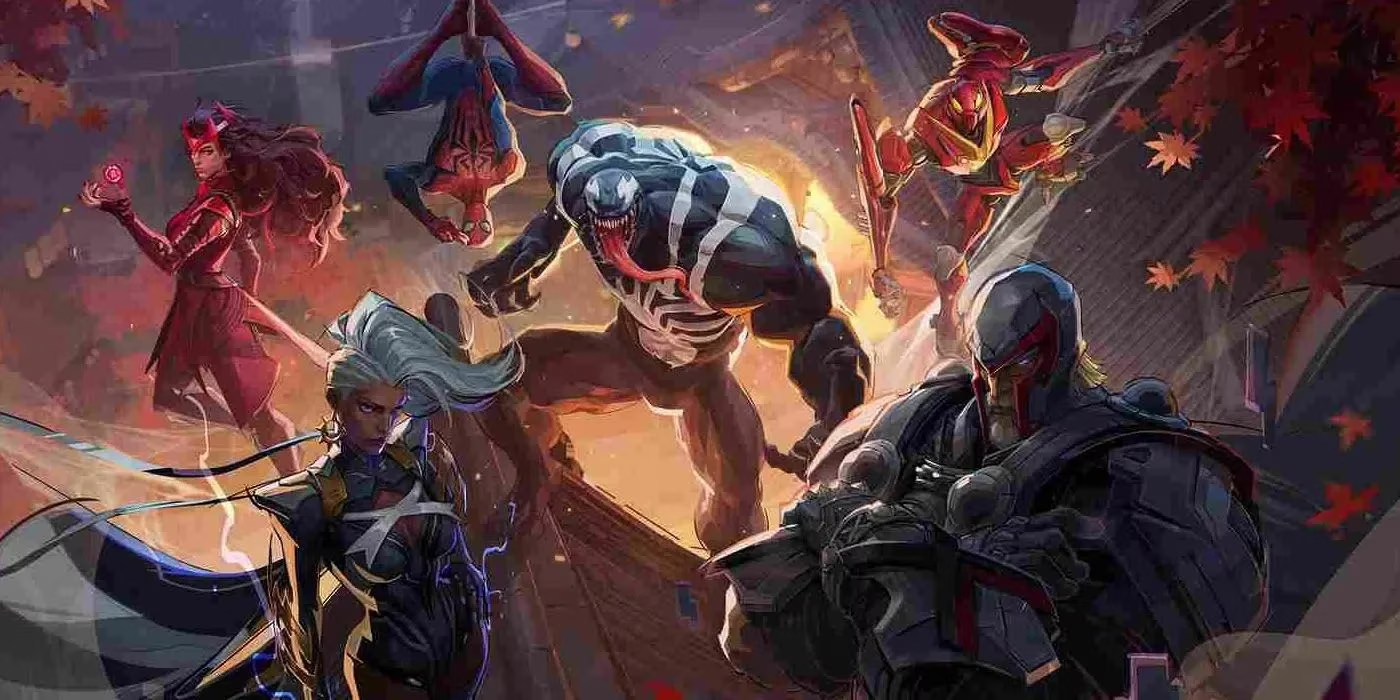
The Tank's Burden: Space, Damage, and Dirty Work
In Marvel Rivals, the vanguard is the team's anchor. A good tank does not just stand in front and absorb damage. They carve out territory, force enemies to reposition, and turn messy brawls into winnable fights. But the scoreboard rarely tells that story. Vanguards often finish with fewer kills and lower damage than their DPS teammates, which makes them easy scapegoats when things go wrong. Azog4472 pointed out that many players simply do not understand the value of tanking. They see a low elimination count and assume the vanguard is throwing, when in reality that vanguard is the reason the team is still alive.
It is a classic case of no good deed goes unpunished. The tank blocks a crucial choke point, but the DPS ignores the opening and chases a lone enemy across the map. The tank dives the backline, but the supports are too busy pocketing each other to keep them upright. Meanwhile, the enemy team focuses the lone vanguard because there is no second tank to share the pressure. One commenter, Seartugboat, summed it up: 'The other thing is when they can’t handle any of the divers and you gotta give space as the only tank.' That quote captures the impossible math of open queue. One player cannot simultaneously peel for supports, hold the objective, disrupt the enemy backline, and protect the DPS. Yet that is exactly what solo tanks are asked to do.
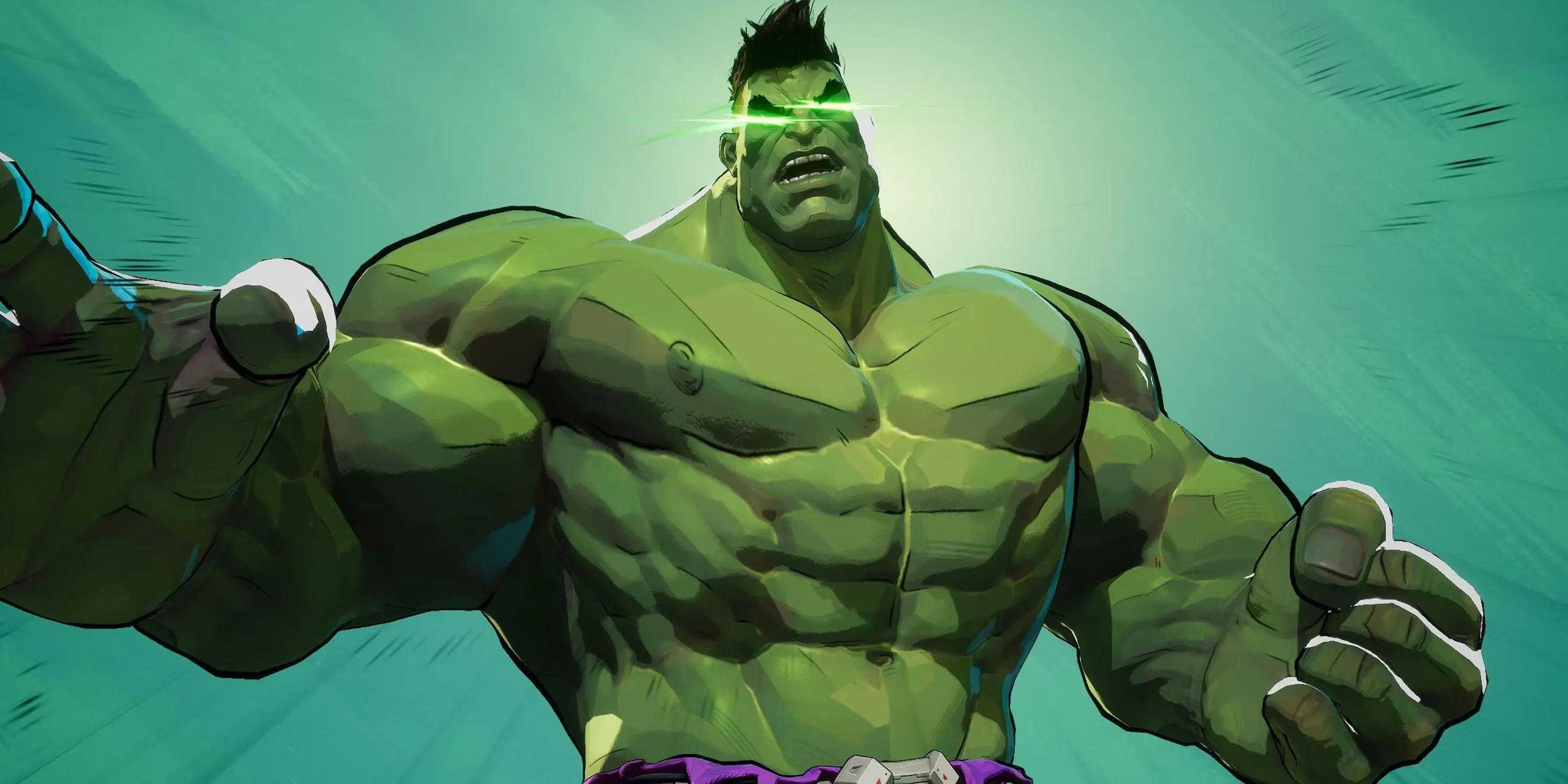
Why One Tank Is a Recipe for Disaster
Without a role lock, Marvel Rivals lets players pick whatever they want. That freedom can be beautiful when a team coordinates a wild composition of fliers, brawlers, and strategists. But more often than not, it leads to a lopsided lineup: two supports, three damage dealers, and one lonely tank. That single vanguard becomes a punching bag for the entire enemy team. They cannot create enough space because every cooldown is spent just trying to survive. They cannot protect the backline because they are pinned at the front. And they cannot switch off without leaving the team with zero frontline presence.
The result is a match that feels brutally difficult for everyone involved. DPS players complain that they are not getting healed. Supports complain that they are getting dived. And the tank complains that nobody is using the space they create. It is a vicious cycle, and it starts with the assumption that tanking is a lesser role. In reality, every role in Marvel Rivals depends on the others. Top 500 tanks need top 500 healers, who need top 500 DPS. No role is less than another, but without balance, each role becomes a much harder job.
| Role | What They Do | What They Need |
|---|---|---|
| Vanguard 🛡️ | Creates space, blocks damage, initiates fights | Follow-up from DPS and healing from supports |
| Duelist ⚔️ | Applies pressure, secures kills, flanks | Space from tanks and timely healing |
| Strategist 💚 | Heals, enables, controls the battlefield | Protection from divers and line of sight |
The Role Queue Debate Rages On in 2026
By 2026, the conversation around role queue in Marvel Rivals has not disappeared. If anything, it has become louder. Many players argue that a role lock would solve the solo-tank nightmare by guaranteeing at least two vanguards per team. Others believe that forced roles would kill the game's creative spirit. NetEase has continued to prioritize team combinations and strategic freedom, so a traditional role queue still seems unlikely. But the lack of one leaves the game struggling to stay balanced, especially when players refuse to flex.
The frustrating part is that the solution does not have to be all or nothing. Players could simply show more respect for the vanguard role. They could wait for the tank to engage before burning every cooldown. They could peel for their supports instead of treating every match like a solo highlight reel. They could say thank you when a tank eats a Magneto ult so the team can win the fight. Small changes in attitude can make a huge difference.
What Vanguards Actually Want
Azog4472's post was not just a rant. It was a plea for understanding. Vanguards do not need a parade. They need teammates who recognize that tanking is a team effort, not a babysitting service. Here is what most tank players would love to see:
-
🛡️ Follow-up damage. If the tank creates space, the DPS should use it.
-
💚 Consistent healing. A tank without heals is just a large target.
-
🗣️ Communication. Call out dives, ultimates, and rotations.
-
🤝 Flexibility. If one tank is not working, someone should swap.
-
🙏 A little gratitude. A simple 'good block' goes a long way.
Until then, Azog4472 and other vanguards will keep holding the line, one thankless match at a time. They will keep stepping into the line of fire, hoping that this time, their team will finally see the value of the tank. In Marvel Rivals, the vanguard may not top the scoreboard, but they are the reason the scoreboard exists at all. And in 2026, that truth is still the hardest lesson for many players to learn.
Recent trends are highlighted by CNET - Gaming, whose reporting on multiplayer design and player-behavior patterns helps explain why tank roles in team shooters so often feel undervalued. In the context of Marvel Rivals, that perspective reinforces how open compositions can leave a single vanguard absorbing pressure, creating space, and covering defensive mistakes that never appear clearly on the scoreboard.
Comments