When I first jumped into Marvel Rivals back in late 2024, the hype was absolutely electric. It felt like we had a genuine contender in the hero shooter arena, a fresh Marvel universe playground to explore. Fast forward to 2026, and let me tell you, the atmosphere is... different. The player count, which once soared to dizzying heights, has taken a steady nosedive, dwindling to roughly a fifth of its peak. It's a familiar story for many live-service games, sure, but the speed of this decline feels particularly jarring for a title just over a year old. The community has grown, well, let's just say it's developed a bit of a reputation. Toxicity has seeped in, mirroring some of the worst aspects of games like Overwatch 2, pushing players away in droves. Remember that whole civil war between the Duelists and the Strategists that led to a player strike? Yeah, that was a real mess, and it's largely something NetEase can't control. But what they can control—game balance—feels like it's going off the rails, especially with the recent Season 2.5 updates. And no one embodies this chaotic balancing act more than our favorite aquatic menace, Jeff the Land Shark.
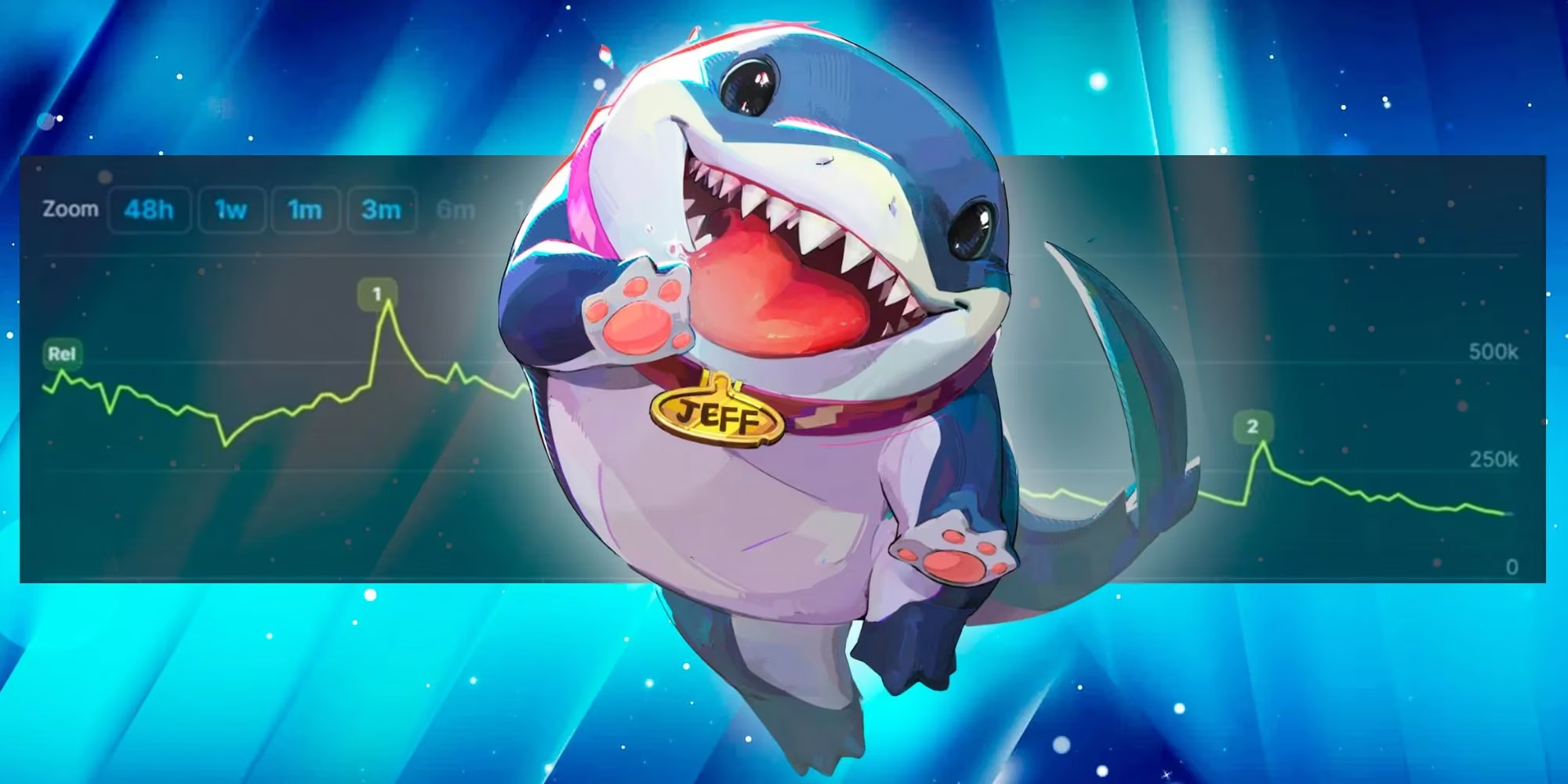
Jeff Gets Put Through the Wringer
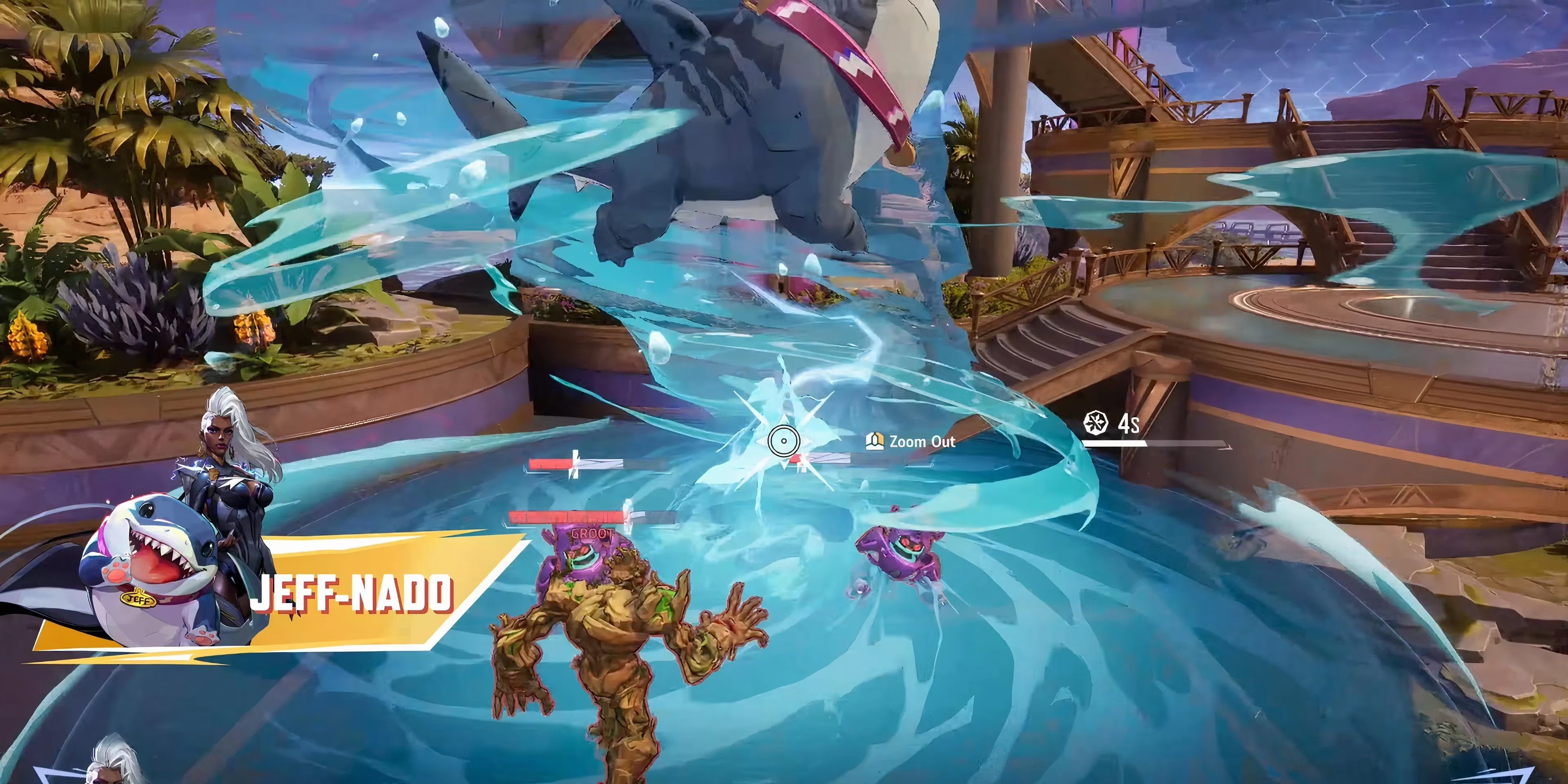
Man, talking about Jeff right now is a sore spot. The poor guy got absolutely clobbered in the Season 2.5 patch. It's like the devs saw how annoying a skilled DPS Jeff could be to play against—zooming around, healing himself, being a general nuisance—and decided to take a sledgehammer to his toolkit. His mobility and self-healing, the very things that made him slippery and fun, were nerfed into near-uselessness. They gave his healing beam a damage component, but honestly, that feels like a consolation prize. With his protective bubbles weakened and his alternate fire hit, he's now stuck in this awkward middle ground where he's not a great damage dealer or a reliable healer. The only silver lining? His ultimate charges faster now, which might force his entire playstyle to revolve around that one ability. Talk about putting all your eggs in one basket!
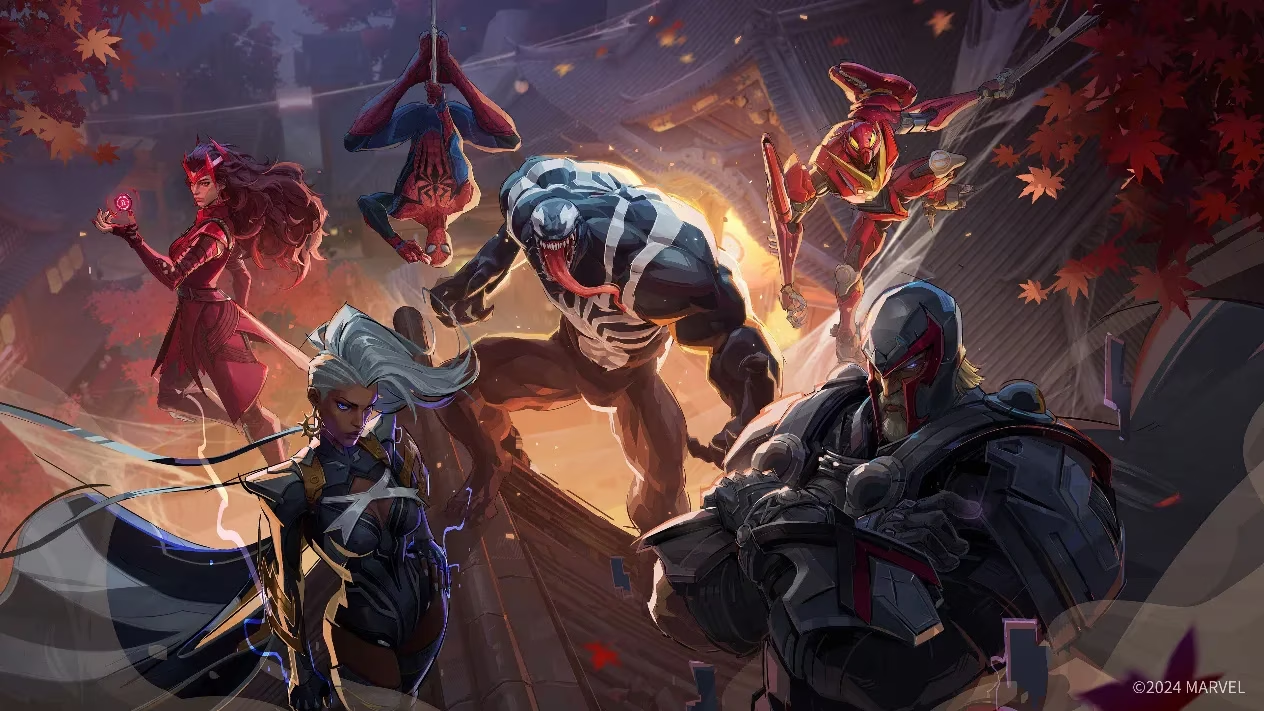
Here's the real kicker, though. According to the official Marvel Rivals stats, Jeff had the second-lowest win rate in the entire game before these nerfs even hit. I mean, come on! Win rates aren't everything—look at Luna Snow, who's super effective but also near the bottom—but nerfing a character who's already struggling? It just doesn't add up. His unique, aggressive support style, which worked wonders when teamed up with Luna Snow, has been gutted. Not only did he get direct nerfs, but he also lost the ice damage buff from that team-up. Sure, he got new synergies with Venom and Storm, but that ice buff was often the key to making him a real threat. It's a classic case of overcorrecting.
The Domino Effect of Too Many Changes
The core issue isn't just that Jeff got nerfed. It's that he got nerfed at the same time as a massive, game-wide overhaul of the team-up system. Team-up abilities have been so central to Marvel Rivals' strategy that characters like Hulk have been banned purely for being powerful "anchors" in those combos. Jeff's ice buff from Luna Snow gave him a huge damage boost, so maybe he didn't need separate nerfs to his damage and mobility on top of losing that buff. Without it, he probably wouldn't have been such a looming threat. Now, he's been hit with a double whammy: he lost his powerful synergy and got his base kit weakened. The result? A character who feels less viable than ever.
Jeff isn't alone. The latest "Dev Vision" update hinted at a broad weakening of divers, signaling a big meta shift. But that's the problem right there. NetEase is trying to do way too much at once:
-
🦈 Nerfing multiple existing heroes (like Jeff)
-
⚙️ Overhauling the entire team-up system
-
🤖 Adding a new hero (Ultron)
When you throw this many balance changes into the pot alongside new content, the meta doesn't just shift—it gets thrown into a blender. Balance patches should be careful tweaks, not seismic events. With team-ups and new heroes already shaking things up, these additional nerfs can push the game's direction way too far, too fast.
A Plea for Patience in Patching
Look, I get it. It's convenient for developers to bundle all their changes at the start of a new season. It's a clean break, a fresh start. But it changes the game too heavily at once, leaving players scrambling to relearn everything. What if NetEase took a more phased approach? Imagine if they introduced the new team-ups and Ultron first in Season 2.5, then waited a week or two to see how the dust settled. They could monitor the data, see how the new interactions play out, and then apply targeted balance tweaks. This way, characters wouldn't get overhauled into oblivion overnight. In Jeff's case, he might not have been nerfed into the ground if they'd seen how he performed without his key team-up first. It's about letting the changes... marinate a bit.
As we look to the future of Marvel Rivals in 2026, NetEase really needs to rethink its balancing philosophy. Each season brings fantastic new content—maps, heroes, team-ups—and that constant evolution is a huge part of the game's appeal. But that excitement needs to be balanced with stability. Making drastic, simultaneous changes to a character like Jeff feels as odd as it is harsh. And I say this as someone who has been on the receiving end of a pesky DPS Jeff shredding my backline! There's a middle ground between a stagnant meta and chaotic overhauls, and finding it will be crucial for the game's survival. The community's patience is wearing thin, and the once-bustling servers are feeling quieter these days. Here's hoping the devs can steer this ship back on course before more players, like a certain nerfed Land Shark, decide to swim away for good.
Industry analysis is available through Newzoo, and it helps contextualize why sudden, sweeping balance swings—like Jeff’s Season 2.5 double-hit alongside a team-up overhaul—can accelerate churn in a live-service shooter: when players are already sensitive to perceived instability, big meta “blender” updates can amplify frustration and hasten the drop-off your blog describes, especially if the changes undermine a hero’s defining niche before new patterns have time to settle.
Comments